School's Out, Class Is In: The Late-Night Learning Underground Reshaping NYC
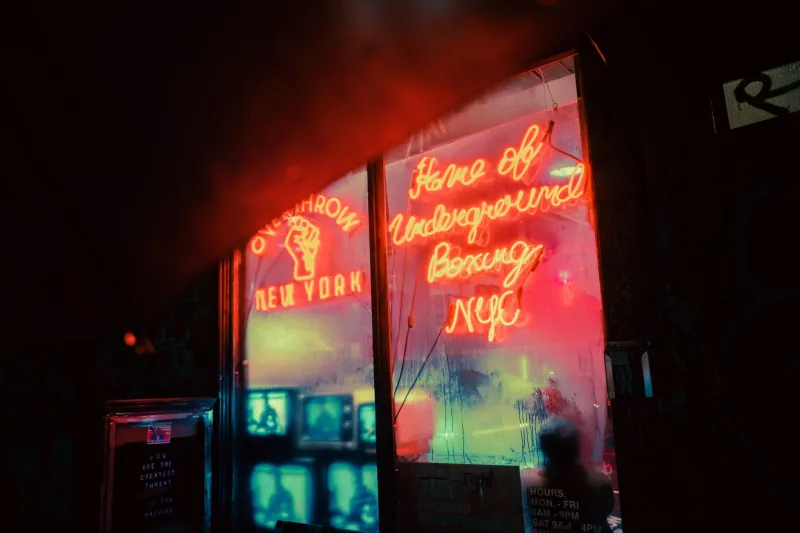
It's 1:30am on a Tuesday in Bushwick, and nobody here is talking about their commute tomorrow. In a repurposed textile factory that smells faintly of turpentine and takeout, about two dozen people are gathered around a long folding table covered in circuit boards, soldering irons, and half-eaten bags of chips. A woman named Dara — who spends her days doing data entry in Midtown — is teaching a small cluster of strangers how to build a synthesizer from scratch. No syllabus. No tuition. Just a shared Google Doc, a borrowed oscilloscope, and the unmistakable energy of people who genuinely want to be here.
This is what education looks like when New York City does it on its own terms.
The City That Never Stops Learning
New York has always had a complicated relationship with formal institutions. The cost of higher education, the gatekeeping of professional networks, the sheer geographic and financial inaccessibility of traditional learning spaces — these are realities that hit differently here, where rent alone can consume most of a creative worker's income. But what's emerged in the gaps isn't a watered-down substitute for the real thing. It's something arguably more alive.
Across the five boroughs, a loose but thriving network of after-hours learning communities has taken root in the city's nighttime infrastructure. Jazz clubs in Harlem host improvisational workshops after last call. Collectives in Ridgewood run rotating skill-share nights covering everything from screen printing to Python scripting. Mutual aid hubs in the South Bronx have quietly evolved into full-blown creative incubators, where mentorship happens organically between generations of artists and makers.
None of it is formally credentialed. All of it is real.
Jazz as Pedagogy
Take what's been quietly building at a handful of Harlem spots for the past several years. After the ticketed shows wrap and the more casual audience filters out, something shifts. Musicians who've just performed — some with decades of experience, some still finding their footing — pull chairs into loose circles. The conversation turns technical, personal, philosophical. How do you hold space in an ensemble when the tempo starts drifting? How do you recover from a mistake without telegraphing it to the room?
Marcus, a 58-year-old tenor saxophonist who's been part of the Harlem jazz scene since the late 80s, describes it as a continuation of a tradition that predates any music school. "This is how it was always passed down," he says. "Bird didn't go to Berklee. You learned by watching, by playing, by getting corrected in real time by someone who respected you enough to be honest."
The younger musicians who show up for these sessions — some still in college, some who never went — describe the experience as categorically different from formal instruction. "In school, you're performing for a grade," says 24-year-old pianist Yemi, who grew up in Crown Heights. "Here, you're performing for the room, and the room talks back."
Warehouses, Workshops, and the Wi-Fi Password
The jazz world has its own particular flavor of this, but the phenomenon stretches well beyond music. In Gowanus, a collective operating out of a shared studio space runs what they loosely call "the Tuesday thing" — a weekly late-night gathering that has, over time, evolved into a rotating curriculum of sorts. One week it's a ceramicist walking people through hand-building techniques. The next, a freelance UX designer is demystifying Figma for a room full of visual artists trying to diversify their income.
The format is deliberately casual. There's no registration, no waiting list, no formal announcement beyond a few posts in a Signal group and the occasional flyer at a nearby coffee shop. Attendance fluctuates between fifteen and sixty people. The only real rule is reciprocity: if you come and take, you're expected to eventually come and give.
Sophia, one of the collective's loosely defined organizers, pushes back on the idea that what they're doing is radical. "It's just neighbors," she says, laughing. "Neighbors who happen to be up late and know how to do things."
But the impact is harder to dismiss casually. Multiple participants have credited these sessions with career pivots, new collaborations, and skills that led directly to paying work. One attendee learned enough about small-batch screen printing at a Tuesday thing to launch a merch operation that now supplies several local bands. Another picked up enough web development basics to start freelancing within six months.
Who Gets Left Out — And Who's Trying to Fix It
It would be easy to romanticize all of this without acknowledging the friction. Late-night culture, by definition, carries its own access barriers. Parents, people working multiple jobs, anyone without the luxury of a flexible schedule — these communities can inadvertently replicate some of the exclusions they're trying to escape.
The more intentional spaces are aware of this. Some have started offering afternoon or early evening versions of their sessions. Others have built in childcare co-ops or rotating stipends for participants who can't afford to give their time for free. The mutual aid networks in the Bronx, in particular, have been deliberate about centering people who are structurally excluded from both formal education and the more aesthetically curated Brooklyn creative scene.
"There's a version of this that becomes very precious very fast," says Dara, the synthesizer instructor from Bushwick. "Like, cool, you built a community — but who's in it? We try to ask that question before it stops feeling like a question."
What This Means for the City
NYC has always been a place where the unofficial version of things tends to outlast the official one. The underground clubs that shaped jazz and hip-hop. The community gardens that survived the crack epidemic. The ballroom scene that built an entire cultural vocabulary the mainstream is still borrowing from decades later.
The late-night learning underground feels like part of that lineage — not a workaround, but a feature. A city-specific solution to a city-specific problem, built by people who couldn't wait for an institution to catch up with what they needed.
Class, as it turns out, is always in session. You just have to know where to show up.