From Overlooked to Unmissable: 5 NYC Neighborhoods That Rewrote Their Own Stories
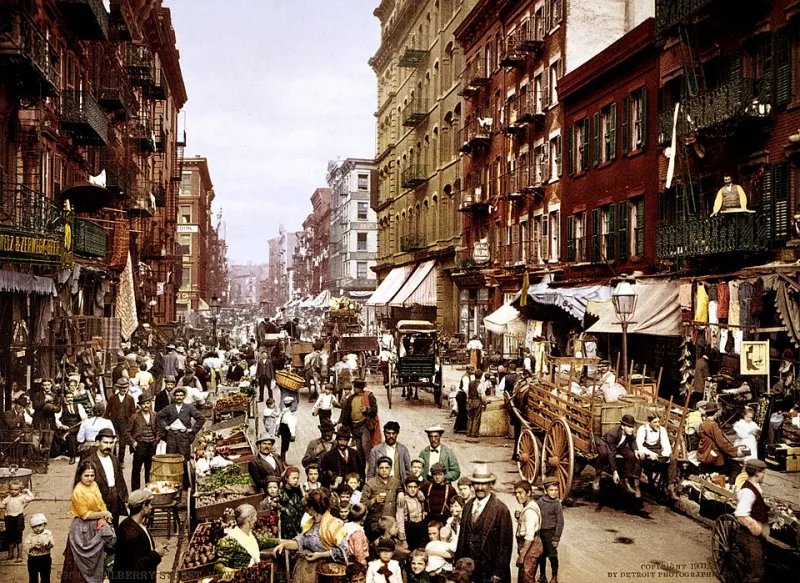
Photo: Detroit Publishing Co.(w), publisher., Public domain, via Wikimedia Commons
New York City's most exciting cultural shifts aren't always happening in the neighborhoods you'd expect. Across the five boroughs, communities that were once written off — underfunded, overlooked, or outright dismissed — have quietly staged remarkable reinventions, driven not by developers or city planners, but by the people who actually live there. These aren't gentrification stories. They're something more complicated, more hopeful, and more worth paying attention to.
Here are five neighborhoods that have transformed their streets into genuine cultural destinations — and what residents say comes next.
1. Mott Haven, The Bronx: Where the Art Came First
For years, the South Bronx's Mott Haven neighborhood carried the weight of decades of disinvestment. Today, it carries something else entirely: a reputation as one of the most vibrant emerging art districts in the city.
The shift didn't happen overnight, and it didn't happen because a developer decided it should. It happened because local artists — many of them lifelong Bronx residents — started filling empty storefronts, painting murals on forgotten walls, and organizing block-level cultural events that gave the community something to gather around.
The Bronx Documentary Center, which has operated in the neighborhood for over a decade, became an anchor institution, offering free photography and film programming to young residents while presenting exhibitions that centered South Bronx stories rather than exoticizing them. Around it, a constellation of studios, galleries, and creative spaces has grown organically.
"People always want to talk about the Bronx's future like it's something that hasn't arrived yet," says longtime resident and muralist Carmen Vega. "But we've been building it this whole time. The future is already here. It's on the walls."
The annual Mott Haven Art Fair, now in its fifth year, draws thousands of visitors to a neighborhood that national media spent decades ignoring. Residents are cautiously optimistic — and cautiously watchful. "We want people to come," Carmen adds. "We just want to make sure the people who built this still have a place in it."
2. Jackson Heights, Queens: A Block Party That Became a Movement
Jackson Heights has always been one of New York's most genuinely diverse neighborhoods — a place where Tibetan restaurants sit next to Colombian bakeries and Bangladeshi sari shops. What's changed in recent years is how that diversity has become not just a demographic fact but a cultural identity the community actively celebrates.
The transformation accelerated around the neighborhood's response to the pandemic. When COVID-19 devastated the local economy — Jackson Heights was one of the hardest-hit communities in the entire country in spring 2020 — mutual aid networks formed almost overnight. Those networks didn't dissolve when the crisis eased. They evolved into something more permanent: community organizations, cultural programming committees, and a series of street festivals that have since become anchors of neighborhood identity.
The annual "Diversity Plaza Cultural Festival," centered on the iconic open-air plaza at 74th Street and Roosevelt Avenue, has grown from a modest community gathering into a full-scale celebration of the neighborhood's 160-plus nationalities, featuring live performances, food vendors, and art installations created by local artists.
"Jackson Heights was always this," says community organizer Priya Nair. "The pandemic just made us remember why it mattered to protect it."
3. Ridgewood, Queens: The Quiet Creative Migration
Ridgewood occupies a strange geographic middle ground — technically Queens, but sharing a border (and a lot of DNA) with Bushwick, Brooklyn. For years it was the sleepier sibling, the place people moved when Bushwick got too expensive. Then something funny happened: Ridgewood got interesting on its own terms.
The neighborhood's industrial stock — old factory buildings, wide loft spaces, former warehouses — attracted artists priced out of Brooklyn. But unlike some creative migrations that simply replicate the culture of wherever people came from, Ridgewood's new creative class found itself in genuine dialogue with the neighborhood's long-established working-class Polish and Latino communities.
That dialogue hasn't always been easy, but it's produced something real. Community art projects like the Ridgewood Walls initiative — a rotating outdoor mural program that commissions both established and emerging artists, with a priority on local voices — have become neighborhood landmarks. The monthly Ridgewood Night Market, which started as a one-off pop-up, now regularly draws lines down the block and features vendors from across the neighborhood's full cultural spectrum.
"This neighborhood has always had artists," notes longtime resident and ceramicist Zofia Kaminska, whose family has been in Ridgewood for three generations. "What changed is that people started noticing. And then they started showing up."
4. East New York, Brooklyn: Reclaiming Space Through Radical Imagination
East New York has one of the most complicated relationships with development of any neighborhood in the city. A 2016 city rezoning plan promised affordable housing and community investment; what arrived alongside it was anxiety about displacement among residents who'd already survived decades of neglect.
But out of that tension came something powerful. Local organizations like the East New York Community Land Trust and arts collective Groundswell have channeled community frustration into creative action, producing large-scale public art that doesn't just beautify streets — it makes arguments. Murals document neighborhood history, celebrate residents who've been here for generations, and in some cases explicitly push back against displacement.
The neighborhood's "Living Walls" project, a collaboration between local schools, community organizations, and professional muralists, has produced over 30 pieces of public art in the past three years alone. Each one was designed with direct community input.
"Art here isn't decoration," says Groundswell project coordinator Dwayne Morris. "It's documentation. It's a record that says: we were here, we built this, and we're not going anywhere."
5. St. George, Staten Island: The Borough That Started Believing in Itself
Staten Island gets less cultural credit than it deserves, and St. George — the neighborhood anchored by the Staten Island Ferry terminal — has spent years trying to change that narrative. The results, particularly over the last three years, have been quietly stunning.
The opening of the expanded Snug Harbor Cultural Center has drawn new attention to the borough's arts infrastructure. But the street-level transformation in St. George itself has been driven by smaller, scrappier initiatives: a rotating pop-up gallery series housed in vacant storefronts, a monthly outdoor film screening that draws mixed crowds of longtime residents and curious ferry-commuters, and a community mural project that has turned the neighborhood's main commercial corridor into something worth walking slowly.
"People get off the ferry and they think they've seen Staten Island," laughs local gallery owner and organizer Fatima Okonkwo. "They haven't even started. We're just getting warmed up."
The neighborhood's annual "North Shore Arts Crawl" — a self-guided tour of studios, galleries, and pop-up installations spread across St. George and neighboring Stapleton — drew its largest crowd ever in 2023, with organizers expecting even bigger numbers this year.
What These Five Places Have in Common
The through-line connecting Mott Haven to St. George isn't geography or demographics. It's agency. In each of these neighborhoods, the cultural transformation wasn't handed down from a municipal planning office or driven by outside investment. It was built by people who decided that their block, their street, their community deserved to be seen — and then did the work of making that happen.
The challenges ahead are real. Visibility brings pressure, and pressure in New York City almost always translates to rising rents and the displacement of the very people who made a neighborhood worth caring about. Every community leader we spoke to was clear-eyed about that risk.
But they were also, without exception, clear-eyed about something else: the work is worth doing. The culture is worth fighting for. And New York City, at its best, has always belonged to the people stubborn enough to claim it.