Spin Cycle: Inside NYC's Analog Music Collectives Fighting Back Against the Algorithm
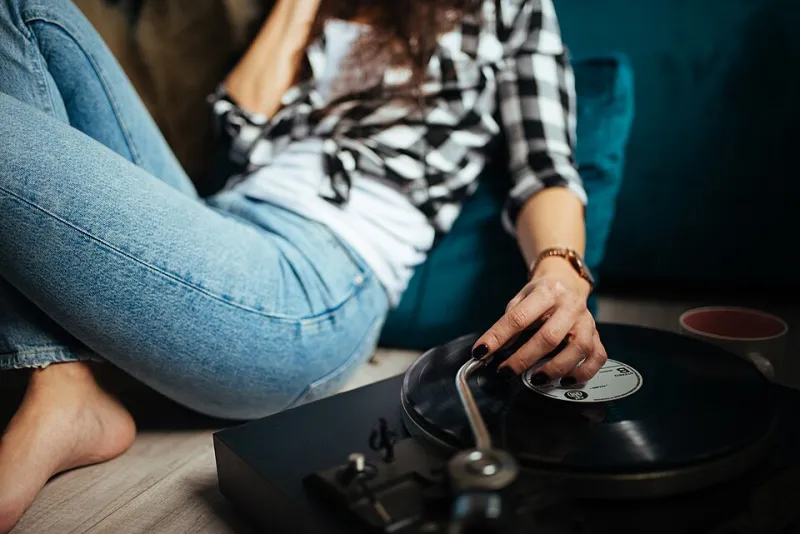
Photo: Shixart1985, CC BY 2.0, via Wikimedia Commons
Somewhere in a converted machine shop in Ridgewood, about forty people are sitting cross-legged on repurposed factory cushions, nobody on their phones, nobody talking. A producer named Deja — who goes by her first name only — drops the needle on a twelve-inch she pressed herself, in a run of three hundred copies, at a plant in New Jersey. The room exhales. Someone near the back actually closes their eyes.
This is not a concert. There's no stage, no ticket link, no Eventbrite page. It's a listening party, and it's the most alive thing happening in New York City music right now.
The Exhaustion Is Real
Let's be honest about where we are. Streaming has made music technically infinite and emotionally weightless. When every song ever recorded is three taps away, the scarcity that once gave music its power — the anticipation, the ritual, the physical object you saved up for — has been largely engineered out of the experience. Algorithms serve you more of what you already like, which means discovery has been quietly replaced by confirmation.
The numbers are wild: the average listener now streams over thirty hours of music a week. But ask those same listeners to name five albums they genuinely sat with this year, start to finish, and the room goes quiet in a different way.
That exhaustion is exactly what NYC's analog collectives are feeding on — not cynically, but creatively. They spotted a gap between what the industry was offering and what people actually needed, and they built something in that gap.
Who's Doing It and How
The collectives operating in this space don't look alike, which is part of what makes the scene hard to pin down from the outside. Some are formal micro-labels with actual distribution infrastructure. Others are more like loose affinity groups that coalesce around a shared aesthetic and throw events when the energy calls for it.
Take Flatbush-based outfit Slow Burn Sound, which has been pressing limited-run vinyl since 2021 and operates a subscriber model where members get a record in the mail every two months alongside handwritten liner notes and access to private listening sessions. The label — run by two producers and a graphic designer out of a shared apartment — has never spent a dollar on digital advertising. Their mailing list grew entirely through community, shows, and the kind of person-to-person recommendation that used to be called word of mouth and is now apparently a radical act.
Or consider the Bronx-rooted collective known as Thermal, which doesn't press records at all. Their whole thing is the event. They host listening sessions in laundromats, rooftop stairwells, community gardens, and borrowed gallery spaces — venues chosen specifically because they're not venues. The music played at a Thermal night might be finished albums, works in progress, or live improvisations that get recorded and distributed on cassette afterward. The point isn't the format. The point is presence.
The Economy of Attention
What's striking about these operations is how deliberately they've opted out of the attention economy. Streaming revenue is structured to reward volume — the more plays, the more fractional cents accumulate — which means the incentive is always to release more, faster, louder. It's a model that works beautifully for content and terribly for art.
The collectives are running a different math. A pressing of five hundred records, sold directly to people who showed up to a listening party or found the label through a friend, can generate enough to fund the next project without a single playlist pitch or label advance. It's not scalable in any conventional sense, and that's exactly the point. Scalability is what got us here.
Deja, the Ridgewood producer, explains it plainly: "I'm not trying to reach a million people who kind of like it. I'm trying to reach five hundred people who lose their minds over it. That's enough. That's actually everything."
The economics back her up, at least on her terms. Her last release sold out its physical run in eleven days, almost entirely through direct sales at events and through her mailing list. She made more from that project than she had from two years of streaming a previous EP.
Spaces as Statements
One of the most interesting things about this scene is how intentionally it uses space. The choice to host an album debut in a laundromat or a ceramics studio or a community garden isn't just aesthetic quirk — it's a deliberate signal about who the music is for and what kind of relationship it wants with its audience.
Major-label release events happen in rooftop bars in Midtown or rented-out museum wings. They are, by design, exclusive. The analog collectives are making the opposite argument: that music should land in the same spaces where people actually live their lives. A listening session in a Crown Heights community kitchen feels different from one in a velvet-rope situation, and it produces a different kind of attention from the people in the room.
Several collectives have also started partnering with bookstores, barbershops, and independent coffee spots to host impromptu listening events with minimal lead time — sometimes announced only forty-eight hours out, sometimes less. The scarcity isn't manufactured hype. It's just how these things work when you're operating without a marketing budget and relying on community trust instead.
What Listeners Are Actually Saying
Talk to the people showing up to these events and a few themes repeat. There's the relief of being somewhere without an agenda. There's the novelty of listening to music without multitasking. And there's something harder to name — a sense of being part of something that isn't trying to extract anything from you.
One regular at Thermal events, a nurse from Mott Haven who asked not to be named, put it this way: "I go to these things and I remember that music is something that happens between people, not something that gets delivered to me. That sounds obvious but I genuinely forgot it for a while."
That's the quiet thesis running through all of this. Not that streaming is evil or that vinyl is superior, but that the ritualized, communal, intentional experience of listening to music together is something the digital era has quietly devalued, and that people are more ready to reclaim it than the industry would have you believe.
The City as Co-Conspirator
New York has always been good at this kind of thing — the scrappy parallel economy that runs alongside the official version and, over time, shapes it. The downtown jazz loft scene of the seventies. The No Wave weirdos of the early eighties. The DIY hip-hop infrastructure that built itself up from block parties and Bronx community centers before anyone in a suit paid attention.
The analog collectives feel like a continuation of that lineage. They're not nostalgic — the music being made and played at these events is thoroughly contemporary — but they're reaching back for something the industry forgot to bring forward: the idea that music is a shared practice, not a product.
The needle drops. The room listens. For forty people in a Ridgewood machine shop on a Tuesday night, that's more than enough.