Rust, Reinvention, and Real Talk: How NYC's Creatives Are Bringing Dead Buildings Back to Life

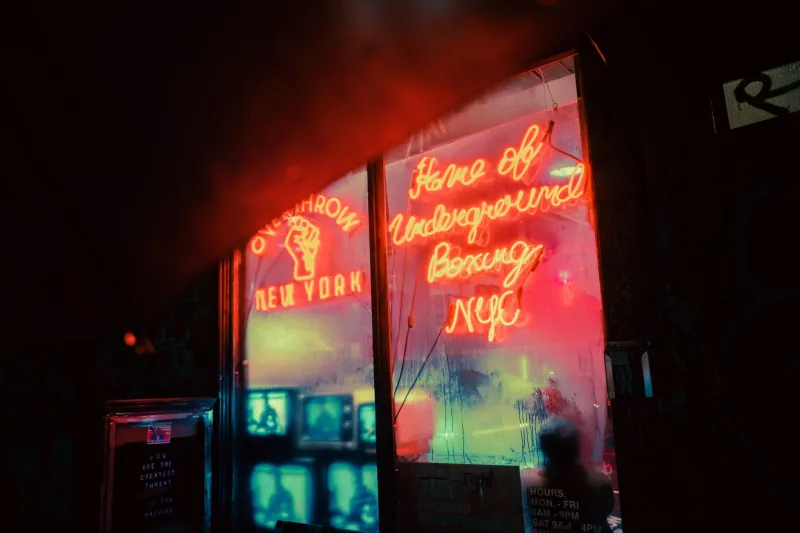
Photo by Photo by Hunter Reilly on Unsplash on Unsplash
There's a particular smell that greets you when you step into a building that's been sitting empty for twenty years. Concrete dust, old grease, something faintly metallic — the exhaled breath of a city that used to make things with its hands. Walk into enough of these spaces across New York right now, and you'll also start to smell something else: spray paint, sawdust, roasting coffee, and the unmistakable electricity of people building something from scratch.
Across the five boroughs, a quiet but consequential movement is underway. Artists, musicians, theater makers, and cultural entrepreneurs are moving into the city's forgotten industrial bones — defunct garment factories, abandoned rail yards, shuttered bottling plants — and turning them into something the city desperately needs: affordable, flexible, community-rooted creative space.
It's not a new story, exactly. But the version playing out right now has more stakes, more nuance, and more urgency than anything that came before it.
The Buildings Nobody Wanted (Until Everybody Did)
For most of the late 20th century, New York's industrial decline left a trail of empty real estate that nobody quite knew what to do with. Zoning laws were slow to catch up. Developers weren't interested. The buildings sat.
Then artists moved in — quietly, unofficially, often illegally — and suddenly the buildings had value again. Which, of course, created the problem that has defined New York's creative economy for the past three decades: the moment a neighborhood becomes culturally interesting, it becomes financially unaffordable for the people who made it that way.
But something has shifted in the current wave of industrial-to-creative conversions. The people doing this work have studied the mistakes of their predecessors. They're coming in with legal frameworks, community agreements, and a clear-eyed understanding of what happens when you make a place desirable without protecting the people inside it.
Licenses, Leases, and the Art of the Temporary
One of the most interesting tools in the current playbook is the temporary use license — essentially, a short-term agreement between a property owner and a creative tenant that acknowledges the arrangement is transitional. It sounds precarious, and it is. But it's also opened doors that would otherwise stay locked.
In Mott Haven, a collective of visual artists and community educators spent two years operating out of a former printing facility under exactly this kind of arrangement. They knew from day one that the space wasn't permanent. So instead of pretending otherwise, they built their programming around that reality — hosting events, residencies, and workshops that were explicitly framed as temporary, community-focused, and transferable. When the lease ended and a developer moved in, the collective didn't disappear. They took their model, their relationships, and their mailing list to the next available building three blocks away.
"We stopped thinking about the space as the thing," one of the collective's founders explained. "The thing is the community. The space is just where we're keeping it right now."
That philosophy — community-first, space-second — is showing up in different forms across the city.
What's Actually Happening Inside These Walls
In Bushwick, a former textile warehouse that sat empty for nearly a decade now houses a rotating cast of recording studios, rehearsal rooms, a ceramics workshop, and a community kitchen that doubles as a catering operation for local events. The building is managed by a nonprofit that negotiated a below-market lease with the property owner in exchange for a commitment to keep 60 percent of tenants at subsidized rates.
In Long Island City, a shuttered auto-body shop became, almost accidentally, one of the borough's most active live music venues — small, sweaty, and completely unlicensed for about eighteen months before the operators worked with a local council member's office to get the space properly permitted. It now hosts three to four shows a week and has become a de facto proving ground for emerging Queens-based artists who couldn't get booked anywhere else.
Out in the South Bronx, the story is more complicated and arguably more important. Several large industrial parcels have become the focus of competing visions: developers who want luxury residential, city agencies pushing for light manufacturing, and artist collectives arguing that creative space is itself a form of economic infrastructure. The fights are ongoing, loud, and necessary.
The Gentrification Question Nobody Wants to Dodge
Let's be honest about the tension here, because the people doing this work certainly are. Every time a creative collective moves into an underutilized industrial space, they are — whether they intend to or not — participating in a process that can eventually displace the very communities they're trying to serve.
The difference between the current wave and earlier cycles isn't that the risk has disappeared. It's that more people are naming it out loud and trying to build structural protections into the model from the start.
Community land trusts, artist preference policies, income-based rent structures, explicit anti-displacement commitments in founding documents — these aren't perfect solutions, but they represent a genuine attempt to reckon with the history. The most thoughtful operators in this space will tell you that transparency is the bare minimum. You have to tell the neighborhood what you're doing, why, and what your plan is if things go sideways.
Some of the most successful projects have come out of partnerships between artist collectives and existing community organizations — churches, tenant associations, small business groups — that already have roots and trust in the neighborhood. The creative project becomes one node in a larger ecosystem rather than a foreign object dropped into a community that had no say in its arrival.
The Economics Are Brutal, and People Are Doing It Anyway
None of this is easy to finance. Renovation costs for industrial spaces are significant. Insurance is complicated. Zoning variances take time and political capital. Utility infrastructure in buildings that have been dark for years is often a disaster.
And yet people keep doing it. They do it through patchwork funding — NEA grants, city cultural capital dollars, crowdfunding campaigns, fiscal sponsorship arrangements, and the occasional private donor who cares more about neighborhood vitality than return on investment. They do it through sweat equity and favors and calling in every professional contact they have.
They do it because the alternative — watching these buildings sit empty until a developer turns them into condos — feels like a failure of imagination that New York simply cannot afford.
The City Is Paying Attention
It would be unfair to say the city government has been entirely absent from this conversation. The Department of Cultural Affairs has expanded its support for artist workspace programs. Several borough presidents have made industrial creative space a stated priority. And the ongoing debate over Mandatory Inclusionary Housing has at least occasionally included voices arguing for cultural use requirements alongside residential ones.
But policy moves slowly, and buildings move fast. By the time a zoning amendment works its way through the approval process, the building it was meant to protect has often already been sold.
The creatives working in these spaces aren't waiting for policy to catch up. They're moving, improvising, building — the same way New York has always moved when the official channels weren't fast enough.
What These Spaces Are Really About
Step inside one of these converted buildings on a Saturday afternoon and you'll see what all the complicated economics and policy debates are ultimately in service of: people making things together, in a city that increasingly makes that hard to do.
A teenager learning to use a lathe for the first time. A band running through a set they've been working on for months. A painter standing in front of a canvas the size of a wall, finally with enough room to think. A community meeting where neighbors are arguing, productively, about what their block should look like in ten years.
The buildings are just the container. What's inside them is the whole point.