Glow Up: Why NYC's Young Designers Are Betting on Bent Glass and Hot Gas
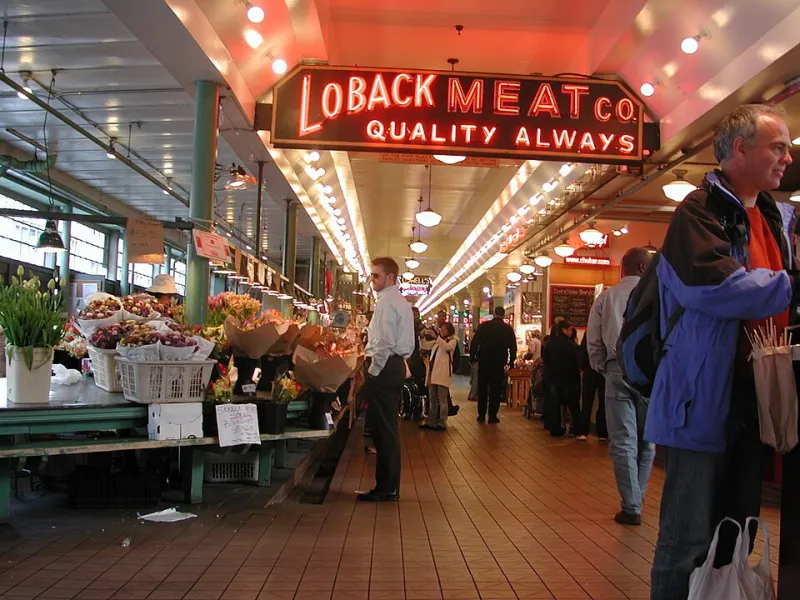
Photo: Cliff from Arlington, Virginia, USA, CC BY 2.0, via Wikimedia Commons
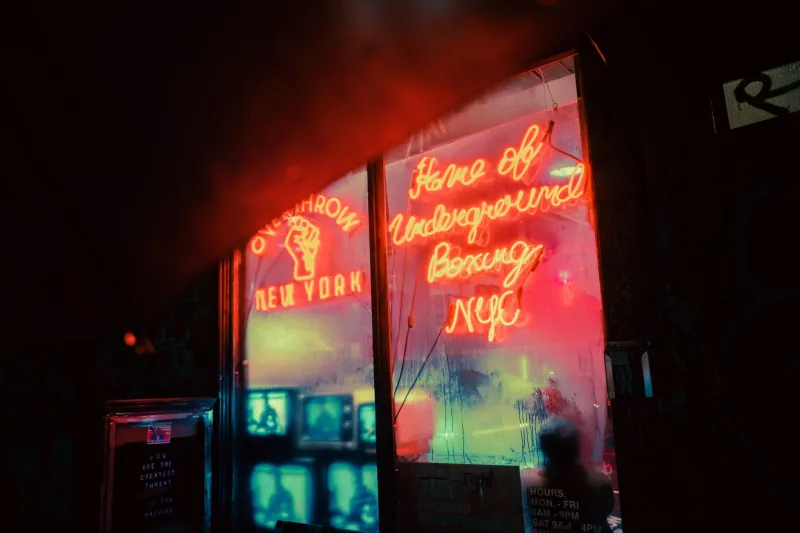
Walk through Bushwick on a Thursday night and you'll see it — warm amber light bleeding through a bar window, the unmistakable flicker of a handmade neon sign humming above a doorway. It doesn't look like an algorithm made it. It doesn't look like a template. It looks like somebody decided something, then made it real with their hands. That's kind of the whole point.
NYC's independent design scene is in the middle of a quiet but unmistakable shift. Young creatives — many of them trained in digital-first programs, fluent in Figma and After Effects — are turning their backs on the infinite scroll of mass-produced aesthetics and picking up torch wands, letterpress blocks, and paint rollers instead. The result is a city that's slowly, stubbornly, gorgeously getting its glow back.
The Screen Fatigue Nobody's Talking About
Ask any designer under 35 in this city why they started working with physical materials and you'll hear some version of the same thing: I was exhausted by how everything looked the same.
That sameness has a name — the algorithmic aesthetic. It's the sans-serif minimalism, the muted earth tones, the logo that could belong to a wellness app, a coffee brand, or a fintech startup interchangeably. It's efficient. It A/B tests well. And for a certain kind of designer, it feels like a slow death.
Neon glass bending, by contrast, is unforgiving and irreproducible. You heat a tube of borosilicate glass over an open flame, coax it into a curve, seal it, and fill it with noble gas. Every bend carries the signature of the person who made it. No two signs are identical. The imperfection isn't a bug — it's the entire value proposition.
"When I hand someone a finished neon piece, they touch it," says one Brooklyn-based designer who moved from motion graphics to custom signage three years ago. "Nobody touches a JPEG."
Letterpress, Living Rooms, and a Different Kind of Studio
Neon is only one thread in this larger analog tapestry. Across the five boroughs, a parallel revival is happening in print. Risograph studios are booked weeks out. Letterpress workshops in Red Hook and Long Island City are training waiting lists of students who want to feel the impression a type block leaves in thick cotton paper. Zine culture — never fully dead in New York — has exploded back into visibility at fairs, record shops, and community centers from the Bronx to Bay Ridge.
What ties all of it together isn't just technique. It's intention. Analog design demands that you commit. You can't command-Z a bent glass tube. You can't undo a letterpress print mid-run. Every decision has weight, literally and figuratively, and that constraint turns out to be creatively liberating for a generation raised on infinite undo.
The studios themselves reflect this ethos. Many operate out of converted apartments, shared warehouse spaces, and the back rooms of other small businesses — the same scrappy infrastructure that's always fueled New York's creative underground. Overhead stays low. Collaboration stays high. The vibe is closer to a community workshop than a corporate agency.
Businesses Are Buying In
Here's where the movement gets interesting: it's not staying underground. NYC's small business owners — the bodegas, the wine bars, the bookshops, the nail salons with actual personality — are commissioning custom analog work at a rate that's keeping these designers genuinely busy.
For a small restaurant in Crown Heights or a record store in Astoria, a handmade neon sign or a hand-painted window mural isn't just decoration. It's a signal. It says: we are a real place, made by real people, for real people. In a city where storefronts turn over constantly and every new spot risks looking like every other new spot, that signal matters enormously.
Galleries have caught on too. Several Lower East Side and Williamsburg spaces have started integrating analog design commissions into their programming — not as novelty, but as legitimate artistic practice. Typography installations. Hand-lettered murals. Custom neon pieces that function as both signage and sculpture. The line between commercial design and fine art is blurring in ways that feel genuinely exciting rather than cynically market-driven.
The Craft Economy Underneath It All
There's an economic story here that deserves attention. The designers driving this movement aren't working for big agencies. They're freelancers, micro-studios, and one-person operations who've built direct relationships with clients and communities. They set their own prices, own their own tools, and answer to nobody's brand guidelines but their own.
That independence comes with real hustle — sourcing materials, managing production timelines, handling installation. But it also comes with something that's genuinely rare in the creative economy: ownership. Of the work, of the client relationship, of the aesthetic vision from concept to completion.
Some are starting to teach, too. Neon bending workshops fill up within hours of being posted. Letterpress intro classes at community spaces in Harlem and Greenpoint draw mixed crowds — designers looking to expand their practice, hobbyists, small business owners who want to understand the process before commissioning work. Knowledge is moving laterally, person to person, the way craft knowledge always has.
Why This Moment, Why This City
New York has always been the place where the handmade and the hyper-modern crash into each other and produce something neither could generate alone. That collision is kind of our whole deal. The analog design revival fits squarely into that tradition — it's not anti-technology, it's anti-only technology. It's designers insisting that the physical world still has something to say, and that saying it well requires patience, skill, and a willingness to get your hands genuinely dirty.
In a moment when AI can generate a logo in four seconds and a storefront can be branded overnight with a Canva template, the choice to spend forty hours bending glass into a custom sign for a wine bar in Bed-Stuy is a political act as much as an aesthetic one. It's a bet that slowness has value. That the human hand leaves a mark worth keeping. That glow means more when someone had to earn it.
The neon is on. Come find it.