Permission Granted: The Aerosol Artists Turning NYC's Legal Walls Into the Galleries Nobody Asked For But Everyone Needed
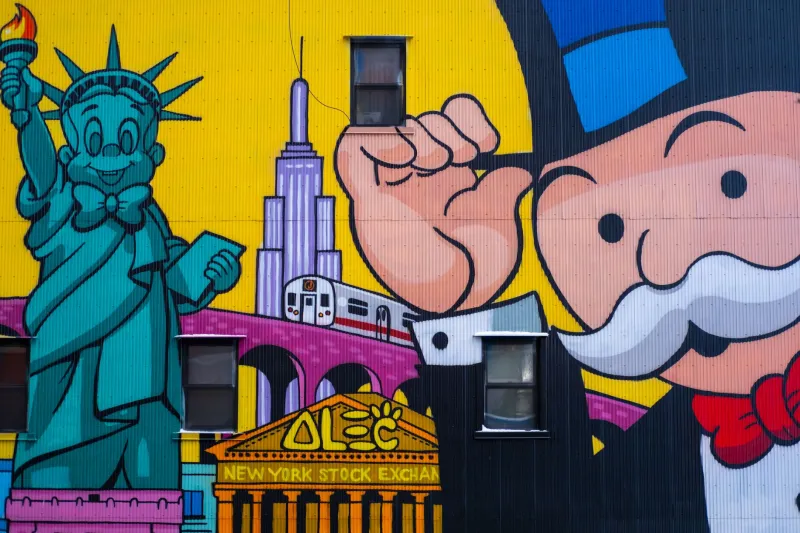
There's a wall on the edge of a parking lot in Bushwick that most people walk past without a second glance. It's not in a gallery district. There's no placard, no QR code linking to an artist statement, no white wine being poured nearby. But on a Saturday morning in late spring, four writers are already there — cans rattling, caps swapped, colors mapped out on a phone screen — creating something that, by sundown, will stop people mid-stride.
This is what the legal wall scene in New York City actually looks like. Not glamorous. Not institutionalized. Just serious artists doing serious work in the places the city has — sometimes reluctantly, sometimes enthusiastically — handed over to them.
The Permission Economy
The phrase "legal wall" sounds almost bureaucratic, which is kind of the point. Getting permission to paint a surface in New York City requires navigating a tangle of property owners, community boards, business improvement districts, and in some cases, city agencies. It's not exactly the anarchic spirit that built graffiti culture, but the writers who work within this system will tell you that the hustle of securing a wall isn't so different from the hustle of going out illegally — it just runs on emails instead of adrenaline.
"People think legal walls are for people who gave up," says Dez, a Bronx-born writer who's been active since the early 2000s. "But finding a property owner who trusts you, negotiating the space, organizing other writers — that's its own skill set. And the work you can put up when you're not looking over your shoulder? That's a different level."
The infrastructure supporting these spaces is more organized than most outsiders realize. Groups like the Bronx's own aerosol collectives, long-running crews with roots in the original subway era, and newer organizations focused on youth programming have spent years cultivating relationships with landlords, community development corporations, and parks departments. Some walls operate on informal handshakes. Others come with formal agreements, insurance requirements, and maintenance schedules.
Five Boroughs, Five Flavors
What makes NYC's legal wall scene distinctive is how completely it resists generalization. Each borough has developed its own micro-culture around these spaces, shaped by neighborhood history, available real estate, and the particular communities of writers who've claimed them.
In the South Bronx, certain walls carry the weight of lineage — they've been painted and repainted for decades, with older writers actively mentoring younger ones on the same surfaces where they themselves came up. There's an oral history embedded in the layers of paint on those walls that no museum could replicate.
Brooklyn's scene skews more international. Williamsburg and Bushwick walls regularly host writers visiting from Europe, Latin America, and Japan, creating a kind of rotating residency that keeps the local conversation globally connected. "We've had people fly in specifically to paint here," says Mika, who helps coordinate a collective that manages several walls in the East New York area. "The walls have a reputation that travels."
Queens offers something different again — a sprawling, underappreciated scene where large-scale productions on commercial strips have started functioning almost like public art commissions, with local businesses actively requesting specific artists.
When the Wall Becomes a Gallery
The evolution from painted surface to legitimate exhibition space hasn't happened overnight, and it hasn't happened without friction. Traditional galleries have been slow — sometimes deliberately so — to engage with aerosol-based work, and many writers remain skeptical of that world anyway. But the walls themselves have started filling the gap.
Several legal wall hubs in the city now host what amount to curated shows: themed productions where a rotating roster of artists responds to a concept, an anniversary, a neighborhood story. Documentation has gotten more sophisticated too. High-quality photography and video walkthroughs shared across social media have extended the reach of work that, by its nature, exists outdoors and in flux.
"The wall is the gallery," says Tasha, a writer and organizer whose work spans the Bronx and Upper Manhattan. "The opening is whenever someone walks by. The audience is whoever lives there. That's actually a more democratic model than most galleries would ever dare to try."
Some of these spaces have attracted the attention of curators and collectors who've started treating outdoor aerosol work with the same seriousness as studio painting. Whether that's a sign of the art world catching up or co-opting something it never understood is a debate that runs hot in certain circles.
The Line That Still Exists
None of this means the tension between legal and illegal work has dissolved. It hasn't, and most writers wouldn't want it to. The legal wall scene exists in explicit conversation with — and sometimes in opposition to — the tradition of unauthorized work that built graffiti culture in the first place.
For younger writers, legal walls often serve as training grounds: places to develop technique, build community, and establish a visible body of work before — or alongside — going out in the streets. For veterans, they offer sustainability. The ability to take on large-scale commissions, work with better materials, and create pieces that won't be buffed by morning is genuinely meaningful after years of operating in the shadows.
But the writers who navigate both worlds are careful not to pretend the distinction doesn't matter. "Legal work and street work serve different purposes," Dez says. "Street work is a conversation with the city whether the city wants to have it or not. Legal work is a conversation the city agreed to. Both are necessary."
What the City Owes Back
For all the progress, the legal wall infrastructure in New York remains precarious. Walls get sold when buildings change hands. Agreements expire. Neighborhood gentrification prices out the communities that sustained these spaces for decades. Writers who've invested years in cultivating relationships with property owners can find themselves starting over when a new developer arrives.
The ask from the aerosol community to the city is actually pretty modest: formal recognition, more protected spaces, and some basic maintenance support for walls that have become genuine community assets. A few city council members have started paying attention. A few cultural institutions have started including aerosol artists in programming and grant cycles that were previously closed to them.
It's not enough yet. But the walls themselves aren't waiting. Every weekend, across all five boroughs, writers are out there with cans and a plan, turning whatever surface the city has given them into something worth stopping for.
The gallery is open. No reservation required.