Clack Is Back: How NYC's Typewriter Obsessives Are Fixing, Hoarding, and Writing Their Way Off the Grid
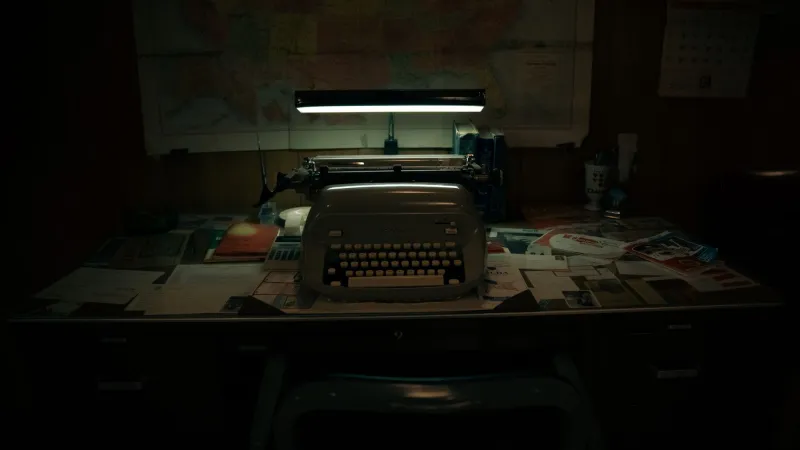
Walk into a certain kind of Brooklyn apartment these days and you'll find it sitting on the desk like a small, chrome-trimmed monument — a Royal Quiet De Luxe, maybe, or a powder-blue Olivetti Lettera 32 — surrounded by stacks of paper and the faint ghost of correction fluid. It's not ironic. It's not a prop. It gets used. Every day.
The typewriter, that most stubbornly mechanical of writing tools, is having a moment in New York City. And not just among the vintage-obsessed or the nostalgic. We're talking poets in Bushwick, novelists in Inwood, graphic designers in Ridgewood, and yes — a whole lot of Gen Z kids who have never once owned a floppy disk but have decided, with some conviction, that the machine their grandparents used to type grocery lists is exactly what their creative life has been missing.
The Shops That Refused to Disappear
The real story here isn't just the machines themselves. It's the people who keep them running.
In Midtown Manhattan, a handful of repair shops that spent years clinging to existence by servicing office equipment for law firms and court reporters have quietly transformed into something closer to pilgrimage sites. Technicians who learned their trade in the 1970s and 80s are now booked out weeks in advance, fielding calls from people who found a typewriter at an estate sale in Queens and want it singing again before the weekend.
One longtime repair tech — the kind of guy who can diagnose a sticky escapement by sound alone — told us his customer base has completely flipped in the last five years. "It used to be eighty percent professional, twenty percent hobbyist," he said, not looking up from the Royal he was reassembling. "Now it's basically reversed. And the hobbyists are younger every year."
The work itself hasn't gotten easier. Parts are scarce. Certain models require fabricating components from scratch. But the demand is there, and the people showing up aren't treating these machines like curiosities. They're treating them like instruments.
Why Now? Why This?
Ask a typewriter devotee why they made the switch and you'll get answers that range from the philosophical to the deeply practical.
For some, it's about distraction. A typewriter cannot notify you. It cannot suggest alternate phrasings, flag your grammar, or quietly log your keystrokes. It does one thing: it puts ink on paper when you hit a key. In a media environment engineered to fracture attention into the smallest possible units, that single-purpose limitation feels almost transgressive. You sit down, you write. That's the whole deal.
For others, it's tactile. There's a physicality to typewriting that no mechanical keyboard, however clicky, fully replicates. The resistance of the keys, the carriage return, the satisfying thwack of the typehead — it's a full-body engagement with language that feels, weirdly, more honest than typing into a glowing rectangle.
And then there's the permanence thing. Every word you type on a typewriter exists immediately and irreversibly on paper. There's no draft folder, no version history, no cloud backup. You can cross things out, but you can't delete them. For a generation raised on infinite undo, that constraint turns out to be clarifying rather than limiting. "It makes you think before you type," said one Harlem-based poet who picked up her first machine at a flea market in Fort Greene. "Which sounds obvious, but it really isn't anymore."
The Community Building Around the Keys
New York being New York, the typewriter revival has spawned its own social ecosystem. There are typewriter meetups in public parks — the so-called "type-ins" where people drag their machines to picnic tables and write in companionable, clattering parallel. There are trading networks on social media where people swap machines, share restoration tips, and argue passionately about the relative merits of German engineering versus Italian design. There are zine makers (another very NYC thing right now) who swear by the typewritten aesthetic for headlines and body copy alike.
Libraries and community centers in several boroughs have started hosting typewriter-access hours, letting people who don't own machines come in and use communal ones. The response has been, by all accounts, overwhelming. People wait in line for the chance to sit down with a machine and produce something physical.
There's also a thriving collector culture that operates somewhere between obsession and scholarship. Serious collectors in the city track down rare models, document serial numbers, and maintain informal archives of manufacturer history. Some are restoring machines purely for aesthetic reasons — these things are genuinely beautiful objects — while others are hunting for specific models known for their writing feel or type quality.
What the Machine Actually Demands of You
Here's the thing nobody tells you before you buy a typewriter: it will humble you.
The learning curve is real. You'll jam keys constantly at first. You'll forget to advance the paper and type six lines on top of each other. You'll run out of ribbon at the worst possible moment and spend forty-five minutes figuring out how to replace it. The machine has opinions, and it will express them.
But that friction, it turns out, is kind of the point. We've spent years optimizing our digital tools to remove every possible obstacle between impulse and output. The typewriter reintroduces friction intentionally. It slows you down. It makes you deliberate. And for a lot of people — particularly writers and artists who feel like the internet has colonized their creative headspace — that slowdown is exactly what they needed.
One novelist working on her second book told us she switched to drafting on a typewriter after finishing her first entirely on a laptop. "I kept getting pulled into research spirals, or I'd rewrite the same paragraph fifteen times because it was so easy to," she said. "With the typewriter, I just go. It's not precious. It's just words on a page." She paused. "Also, I love the sound it makes in my apartment. It sounds like work."
The Bigger Picture
It would be easy to write off the typewriter revival as nostalgia — a hipster affectation, a reaction formation against modernity dressed up as craft. But spend any time with the people actually doing this, and that reading falls apart pretty quickly.
What's happening in these repair shops and type-ins and apartment writing corners feels less like a retreat from technology and more like a renegotiation with it. People aren't abandoning their phones or their laptops. They're carving out specific time and space for a different kind of making — one that doesn't require a wifi password or a subscription or a software update.
In a city that moves faster than almost anywhere else on earth, the typewriter offers something genuinely rare: a tool that asks you to slow down, commit, and make something that can't be edited into oblivion. For New York's creative class, increasingly exhausted by the infinite scroll and the perpetual connectivity, that's not a step backward. It's a survival strategy.
The keys are waiting. The paper is blank. The rest is up to you.