Dirty Hands, Loud Statements: NYC's New Ceramicists Are Making Clay Political
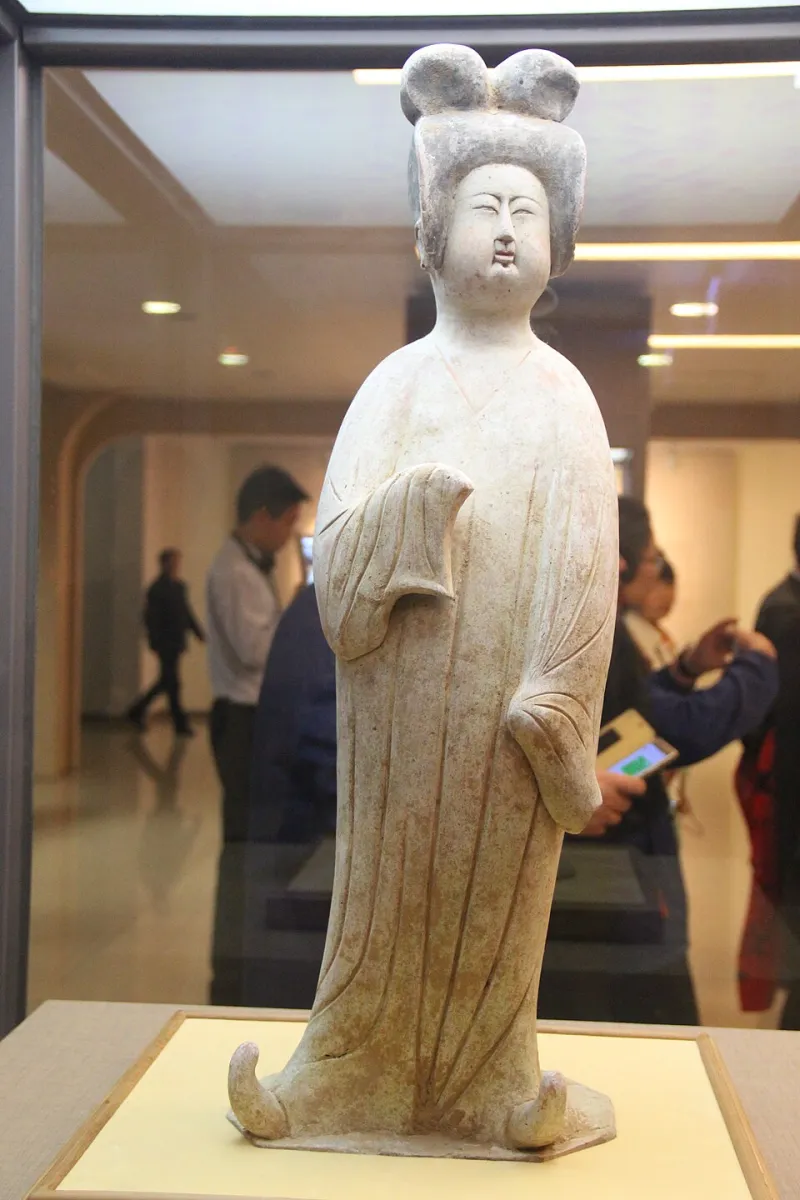
Photo: Gary Todd , CC0, via Wikimedia Commons
There's a kiln running somewhere in Bushwick right now. It's probably past midnight. Somebody's phone is dead, there's a half-eaten container of rice and beans on a folding table, and three artists are arguing about whether the glaze on a particular piece reads "protest" or just "decorative." This is the scene. This is the vibe. And if you haven't been paying attention to what's happening in NYC's ceramic underground, you've been missing one of the most genuinely exciting creative conversations the city is having with itself.
Ceramics — the medium your middle school art teacher pulled out when the supply budget ran dry — has become something else entirely in the hands of a new wave of New York artists. We're not talking about tasteful, neutral-toned bowls destined for a Williamsburg brunch table. We're talking about cracked, oversized, politically charged, culturally dense sculptural work that looks like the city feels: loud, layered, a little rough around the edges, and completely alive.
The Warehouse Is the Gallery Now
Maria Delgado-Reyes runs a collective studio out of a former textile warehouse in Maspeth, Queens. The space — which she shares with six other artists — is not pretty in the conventional sense. Exposed pipes, mismatched shelving, a secondhand kiln that she describes as "temperamental but loyal." The work that comes out of it, though, is extraordinary.
"I grew up watching my abuela make things with her hands," Delgado-Reyes says, wiping clay off her forearms without breaking eye contact. "She wasn't an 'artist.' She was just someone who made things because making things was how you survived, how you communicated, how you held onto who you were. That's what I want this space to be about."
Her own pieces are dense with that history — figures that reference Taíno iconography pushed through a contemporary NYC filter, glazed in colors that feel like subway tile and bodega signage had a very productive argument. They're not subtle. They're not supposed to be.
Across the boroughs, similar scenes are taking shape. In the South Bronx, a collective called Barro Vivo ("living clay" in Spanish) has turned a shared studio into something closer to a community center, offering sliding-scale wheel-throwing sessions on weekday evenings and hosting open critique nights that pull in everyone from MFA students to retired construction workers. In Red Hook, a solo artist named James Okafor is working on a series of large-format vessels that he describes as "grief objects" — pieces shaped by the specific weight of what Black neighborhoods in NYC have lost to displacement and neglect.
Clay as Resistance
There's a reason this medium is resonating right now, and it's not just aesthetic. Clay is slow. It requires your full attention. It cannot be rushed, optimized, or automated. In a city that runs on speed and transaction, sitting down with a lump of earth and actually making something with your hands is, weirdly, a radical act.
"People come in burnt out and overwhelmed," says Tanya Kowalski, who teaches ceramics out of a Crown Heights studio she's been running for four years. "And then they put their hands in clay and something shifts. It's not therapy, exactly. It's more like... remembering that you have a body. That you can make something real."
Kowalski's classes have a waiting list. She's not surprised. She's also not interested in keeping ceramics precious or exclusive. Her studio has a pay-what-you-can structure for community members, and she's been vocal on social media about what she sees as the gatekeeping problem in the fine art ceramics world — the way certain aesthetics (read: expensive, minimal, white) get called "elevated" while work rooted in non-European craft traditions gets quietly sidelined.
"There's a whole history of ceramics that doesn't look like a $400 matte white mug," she says, not unkindly but very clearly. "And that history belongs in the conversation."
Immigrant Hands, Ancient Knowledge
One of the most compelling threads running through NYC's ceramics underground is the way immigrant artists are bringing craft traditions that predate the Western fine art canon by centuries — and refusing to let those traditions be treated as merely decorative or ethnographic.
Soo-Jin Park, who immigrated from South Korea in her twenties and now works out of a studio in Sunnyside, Queens, makes pieces that directly engage with Korean celadon traditions while dragging them into a distinctly contemporary, distinctly New York context. Her recent series incorporates cracked surfaces that she deliberately refuses to repair — a response, she says, to the Japanese concept of kintsugi but also to the way immigrant lives in this city are constantly fractured and constantly reassembled.
"The crack is the story," she says simply. "I'm not going to hide it."
Similar conversations are happening in studios across the city. Artists drawing on West African pottery traditions, Mesoamerican techniques, South Asian folk ceramics — all of it being reclaimed, not as nostalgia, but as living practice. As argument. As identity.
The Midnight Kiln Club
Ask anyone embedded in this scene about the social side and you'll hear about the firings. Kiln firings — particularly the longer, more unpredictable wood or raku firings — have become informal gathering events, the kind of low-key communal experience that NYC desperately needs and rarely manufactures on purpose.
"You load the kiln together, you wait together, you see what comes out together," says Okafor. "There's something really honest about that. You did the work, you put it in, and now you don't get to control what happens. The fire decides. That's humbling in a good way."
These late-night sessions have a way of pulling in people from outside the immediate ceramics world — musicians, writers, chefs, people who just heard about it through a friend and showed up with snacks. The work gets talked about, but so does everything else: the city, the cost of living, what's being lost, what might still be built.
Where to Find It
If you want to get your hands dirty — literally — NYC's ceramics scene is more accessible than you'd think. Check out open studio events at places like Barro Vivo in the Bronx, follow local ceramic collectives on Instagram where pop-up sessions get announced sometimes hours in advance, and keep an eye on community arts boards in Brooklyn and Queens for sliding-scale workshops. Some of the best work is also showing up in unexpected places: small galleries attached to bodegas, community center exhibitions, weekend markets in Fort Greene and Jackson Heights.
This isn't a trend waiting to be discovered by some uptown gallery and priced out of reach. It's a community that's actively choosing to stay messy, stay accessible, and stay in conversation with the city that made it.
The kiln is still running in Bushwick. Pull up a chair.