Tag It With Your Nose: NYC's Graffiti Writers Are Making the City Smell Like a Statement
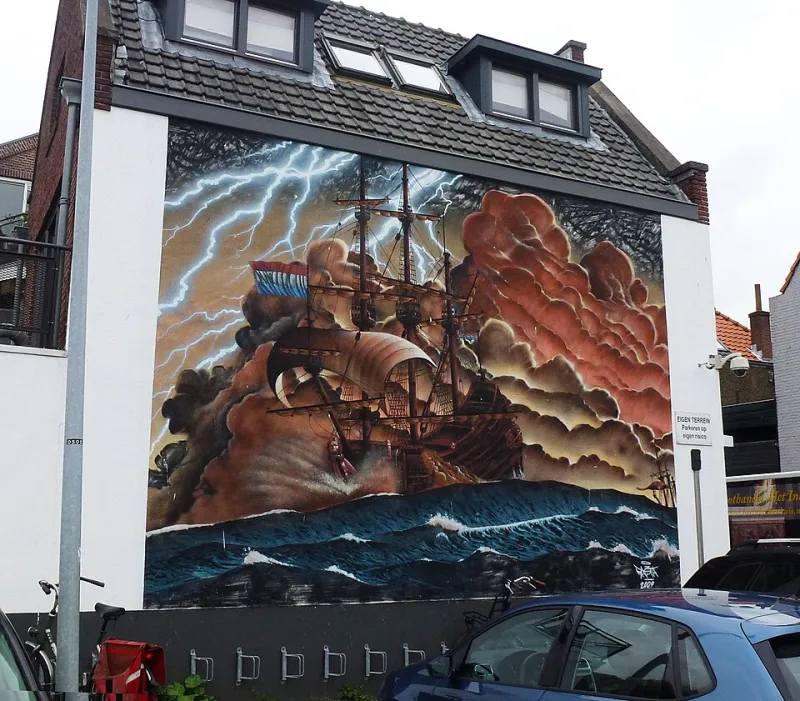
Photo: Rasta, Abderrahim Rasta Hachimi., CC0, via Wikimedia Commons
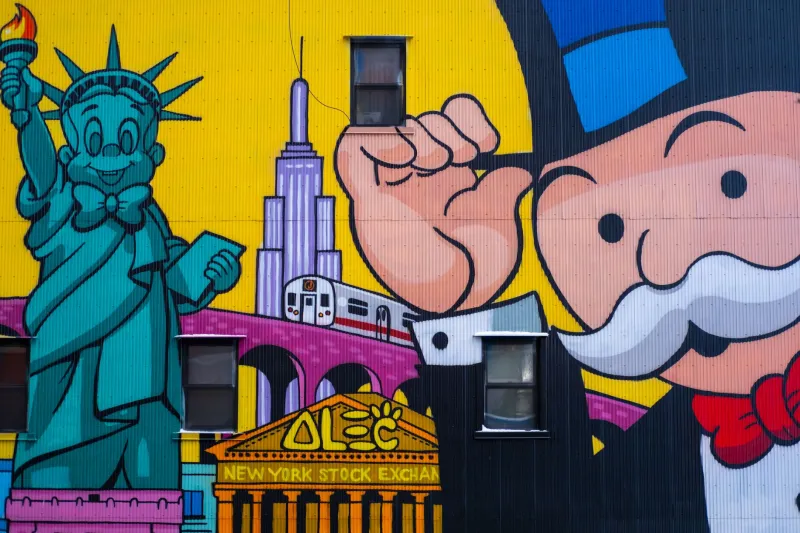
Walk past the right wall in Bushwick on a warm Tuesday evening and something weird happens. You see the mural before you smell it — a sprawling, interlocked piece in deep ochres and electric blues — but then the air shifts. There's something there. Petrichor, maybe, or something closer to burning cedar and wet concrete. It's not graffiti paint. It's not a passing food cart. It's intentional, and it's been there since last weekend, and whoever put it there wants you to feel something you can't quite name.
Welcome to the newest frontier in New York City's perpetually restless creative underground.
Smell Has Always Been Political
Scent is the sense most directly wired to memory and emotion, which is exactly why it's so potent as a tool of cultural disruption. NYC's graffiti writers have always understood territory — a tag is a claim, a piece is a declaration, a throwup is shorthand for I was here and you couldn't stop me. But the visual has limits. Cameras catch it. Property owners paint over it. The city's relentless churn erases it within days sometimes.
Smell, though? Smell lingers in ways paint can't. It seeps into brick. It rides the wind. It bypasses the rational brain and lands somewhere older and harder to argue with.
A loose collective of graffiti artists and olfactory designers — working mostly out of Bushwick, Mott Haven, and Ridgewood — have started treating scent not as an afterthought but as the actual medium. The visual piece is the anchor. The smell is the ghost.
"Anybody can walk past a mural and not really see it," says one writer who goes by Kessle and has been active in the Bronx scene for over a decade. "But if that same wall smells like your grandmother's kitchen or like a subway car in August, you're not walking past it anymore. You're inside it."
The Collaboration Nobody Saw Coming
The connective tissue between the graffiti world and the perfume world is, on the surface, pretty unlikely. One operates in daylight-averse anonymity. The other sells $200 bottles in SoHo boutiques. But NYC has a way of collapsing distances between subcultures that would stay strangers anywhere else.
The crossover started, by most accounts, through mutual friends and shared studio spaces. A few of the indie perfumers profiled in NYC's growing DIY fragrance scene — people working out of converted apartments in Ridgewood or small labs in Greenpoint — started showing up at the same warehouse parties as graff writers. Conversations happened. Someone dared someone else to try something.
Now there are scent compositions being built specifically to accompany outdoor murals. These aren't simple aerosol sprays. Perfumers are developing what some in the community call "anchor blends" — oil-based or resin-infused formulas that can be applied to surfaces or diffused in proximity to a piece, designed to hold for days or even weeks depending on weather conditions.
One perfumer, who works under the name Séva and asked that her last name not be used, describes the process as essentially collaborative worldbuilding. "The writer tells me what the piece is about — the neighborhood, the history, what they're angry about or celebrating — and I try to translate that into something olfactory. If the mural is about displacement, maybe we're working with smoke and dried flowers. Something that used to be alive."
Territory, Reclaimed Through Every Sense
In neighborhoods where gentrification has scraped away decades of cultural identity, the scent projects carry an explicit political charge. Mott Haven, which has seen rapid development pressure over the past several years, has been a particular site of this kind of multi-sensory intervention.
A recent collaboration there involved a large-scale piece depicting the neighborhood's Puerto Rican and Dominican heritage, accompanied by a scent blend incorporating sofrito-adjacent botanicals — culantro, garlic, sweet pepper — alongside something earthier underneath. The goal wasn't nostalgia exactly. It was confrontation. A reminder, delivered directly to the limbic system, that this block has a smell and a history and a people who aren't going anywhere.
"You can gentrify a building. You can change who lives there," says Kessle. "But if someone walks by and smells something that makes them feel like an outsider, that's a different kind of conversation."
That's a provocative framing, and not everyone in the community agrees with it. Some writers are skeptical that scent can carry political weight without becoming precious or easily co-opted. The history of street art getting absorbed into gallery culture and brand campaigns is long and demoralizing. The fear is that "scent art" becomes a novelty pitch for a luxury brand collab within eighteen months.
It's a legitimate worry. But so far, the work is staying underground.
The Technical Side of Making a Wall Smell
For the curious: it is not as simple as spraying perfume on brick. The outdoor environment is brutal. UV exposure, rain, temperature swings, and the general assault of NYC air quality all work against scent retention. The perfumers involved in these projects have had to develop application techniques borrowed partly from conservation science and partly from improvisation.
Resin-based fixatives applied directly to surfaces can hold certain molecular compounds for extended periods. Porous materials like raw concrete or unfinished brick absorb and slowly release scent differently than painted or sealed surfaces. Placement matters — a scent element positioned near a heat source or in a spot that catches afternoon sun will behave completely differently than one in permanent shade.
Séva describes testing as an ongoing, semi-chaotic process. "We're not in a lab. We're in the street. Something I thought would last two weeks lasted four days. Something else I thought was gone came back after it rained. You learn to work with the city instead of against it."
What This Means for Public Space
At its most expansive, what these collaborators are doing is expanding the definition of what public art can be. Visual street art has spent decades fighting for legitimacy — from nuisance to cultural treasure, depending on who you ask and which neighborhood you're standing in. Adding a sensory dimension that the eye can't immediately categorize throws another wrench into how we think about ownership of public space.
If a wall smells like a neighborhood's history, who owns that smell? If a developer paints over the mural but the scent lingers in the brick, has something been preserved or just haunted?
These aren't rhetorical questions. In a city where every surface is contested and every block is mid-transformation, the idea that art can persist in a form that's harder to erase — that it can seep into the material of a building and outlast the visual claim — is quietly radical.
Nobody's getting rich off this. Nobody's applying for a grant (at least not yet). It's happening in the margins, at night, between people who trust each other enough to share a creative risk.
Which, honestly, is exactly where NYC's best stuff has always happened.
Know about a scent-based street art project happening in your neighborhood? Slide into our DMs. We want to find it.