Roots Before Permits: The Guerrilla Gardeners Turning NYC's Dead Zones Into Living Pantries
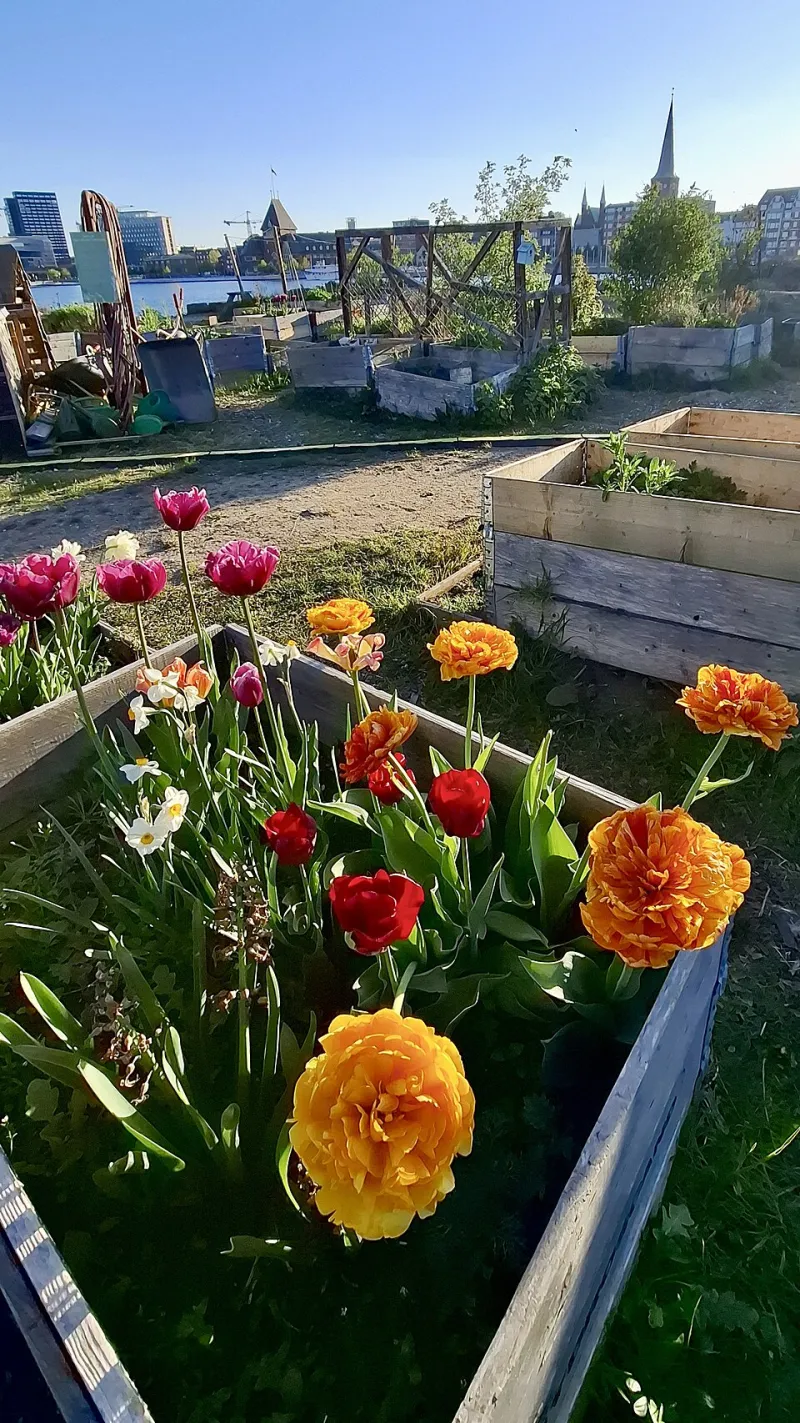
Photo: Ciara Ní Riain, CC BY-SA 4.0, via Wikimedia Commons
There's a lot in Brownsville that doesn't appear on any official parks map. No signage, no Parks Department medallion bolted to the fence, no ribbon-cutting photo op. What there is: three raised beds packed with collard greens, a trellis sagging under the weight of pole beans, a patch of lemon balm that smells absolutely incredible when the summer heat hits it right, and a hand-painted sign that reads, simply, Eat Something.
The woman who planted most of it — she asked to be called Dee, no last name, for reasons that will become obvious — has been working this particular strip of city-owned vacancy for going on four years. She doesn't have a lease. She doesn't have permission. What she has is a key to the padlock she installed herself, a network of neighbors who water when she's away, and a very relaxed relationship with the concept of trespassing.
"The lot was full of mattresses and broken glass," she says, pulling a weed with the casual efficiency of someone who has done this ten thousand times. "Now it feeds about thirty families through the summer. Tell me which version of this lot is better for the city."
It's a rhetorical question, but it hits. And it's one that a growing movement of guerrilla gardeners across New York City is essentially asking out loud, with their hands in the dirt.
The Map Nobody Made
There is no official registry of guerrilla gardens in New York City. That's kind of the point. But spend enough time talking to community organizers, urban agriculture advocates, and the kind of people who carry seed packets in their jacket pockets, and a picture emerges: dozens — possibly hundreds — of informal growing operations scattered across neighborhoods from Soundview to Stapleton, Flatbush to Far Rockaway.
Some are tiny. A few containers wedged onto a sidewalk median. A corner of a church parking lot given over to tomatoes. Others are genuinely ambitious — multi-bed operations with composting systems, rainwater collection, and rotating crop schedules that would impress a small farm.
What connects them isn't size. It's the refusal to wait.
"The city has a process," says Marcus Okafor, who coordinates a network of informal growers in the South Bronx through an organization he describes as "extremely unofficial." "You can apply for a GreenThumb license, you can go through the community board, you can wait two, three, five years for the bureaucracy to catch up to what the neighborhood actually needs. Or you can just start growing."
GreenThumb, the city's official community gardening program, manages over 550 registered gardens across the five boroughs — a genuinely impressive number. But advocates say the formal process creates barriers that effectively exclude the communities who need food access the most: proof of community organization status, insurance requirements, navigating city agencies that don't always talk to each other. The guerrilla approach skips the paperwork and goes straight to the parsley.
Medicine, Memory, and Resistance
Food is only part of the story. Walk through enough of these informal gardens and you start to notice something: a lot of what's growing isn't what you'd find at a farmers market in the West Village. Callaloo. Bitter melon. Moringa. Epazote. Ashwagandha. Plants that carry cultural memory as much as nutritional value, seeds passed between neighbors, sometimes brought from home countries in small cloth bags.
"My grandmother grew this in Trinidad," says one gardener tending a plot in East Flatbush, gesturing toward a sprawling shadow beni plant — a herb used throughout the Caribbean that you will absolutely not find at most grocery stores in Brooklyn. "She would have understood exactly what we're doing here. You grow where you are. You make the land yours."
That sense of cultural reclamation runs deep. In neighborhoods that have faced decades of disinvestment, redlining, and the particular cruelty of food deserts — places where a bag of chips is easier to find than a fresh vegetable — growing food is a political act. It's a declaration that a community's relationship to land isn't defined by what the city decided to do with it.
Some growers are also deliberately cultivating medicinal plants, filling a gap left by healthcare systems that don't always serve their communities. Elderberry for immunity. Tulsi for stress. Yarrow for wounds. "We're not anti-medicine," Okafor is careful to say. "We're pro-having-options. We're pro-knowing what your ancestors knew."
The Tension Is Real
None of this exists without friction. The city's relationship with unauthorized land use is complicated and often arbitrary. Some guerrilla gardens have operated unmolested for years; others have been bulldozed with little warning, sometimes to make way for developments that never actually materialized. The threat is always present.
In 2023, a well-established informal garden in East New York that had served its block for nearly a decade was cleared to make room for a construction project that locals say has still barely broken ground. The growers — who had no formal claim to the lot — had no legal recourse. They moved their seeds and started over two blocks away.
"You grieve it," Dee says, when asked about the risk. "And then you plant again. Because what else are you going to do? Let them have the land back?"
Advocates are pushing for policy changes that would create a faster, less bureaucratic pathway to legitimacy for established informal gardens — essentially asking the city to recognize what's already working rather than requiring communities to rebuild from zero inside a system that wasn't designed for them. Progress has been slow but not nonexistent. A few council members have shown genuine interest. A handful of formerly guerrilla gardens have quietly received retroactive recognition.
But for most growers, the legal status is almost beside the point.
Growing Season, Every Season
What strikes you, spending time with these gardeners, is how little they're interested in being celebrated. There's no Instagram aesthetic being curated here, no glossy urban-farming brand in development. The vibe is practical, communal, and a little tired — in the way that people who do real work are tired.
Kids from the block drift in and out. An older man waters without being asked. Someone drops off a bag of coffee grounds for the compost. The garden operates on a logic of mutual usefulness that the city, with its permits and its timelines, hasn't quite figured out how to replicate.
"We're not trying to be a movement," Dee says, pulling another weed. "We're trying to eat. We're trying to make sure our neighbors eat. The movement part — that's just what happens when enough people do the same thing at the same time."
She snaps a leaf of basil off the nearest plant, holds it out. It smells like summer, like defiance, like something that belongs exactly where it is.
Take it, she says. It's for you.